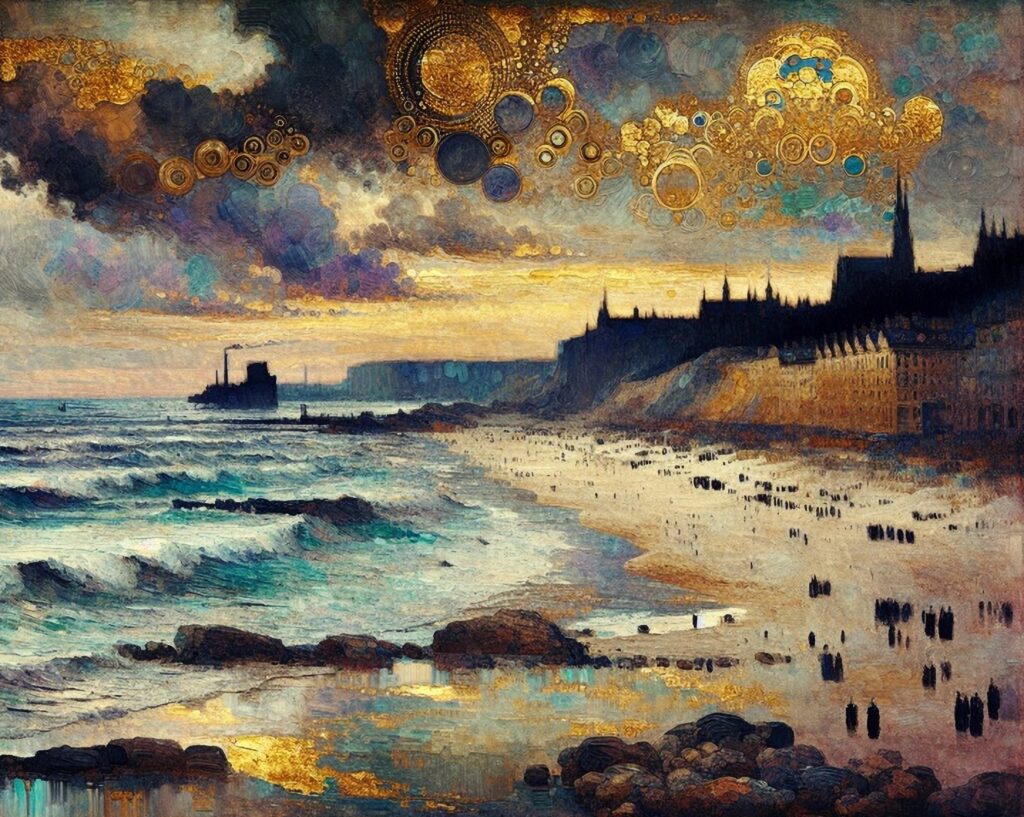
If you are looking for exceptional print quality for artwork or photography, you may have come across the term Giclée print. But what is Giclée, and how is it different from standard digital printing?
In this guide, we explain exactly what Giclée printing is, how it works, and when it is the right choice for your project.
What is Giclée print and how does it work?
Giclée (pronounced zhee-clay) is a professional fine art printing process that uses high-resolution inkjet printers and specialist archival inks to reproduce artwork with outstanding accuracy.
The word comes from the French word gicler, meaning “to spray”, referring to the way microscopic droplets of ink are applied to the surface.
At its core, it is defined by:
- ultra-high resolution output
- pigment-based archival inks
- specialist fine art papers or canvas
- extremely accurate colour reproduction
Why Giclée printing is considered a fine art standard
Archival pigment inks
One of the main reasons people choose this method is its longevity. Its use of pigment-based inks rather than dye-based inks, which makes them significantly more resistant to fading over time.
This makes it suitable for:
- gallery exhibitions
- art sales
- collectors and limited editions
High resolution and detail
Giclée printers operate at a much higher resolution than most commercial digital presses. This allows them to reproduce:
- fine brush strokes
- subtle gradients
- detailed textures
For artists and photographers, this means the final print remains faithful to the original work.
Professional fine art papers and canvas
This technique is normally paired with premium substrates such as:
- cotton rag fine art papers
- textured art papers
- professional artist canvas
These materials enhance the finished look and feel, giving the print a true gallery-quality finish.
What is the difference between Giclée print and standard digital printing?
Printing process
Standard digital printing is typically designed for speed and volume. Giclée, on the other hand, is focused on quality, accuracy and consistency.
Giclée offers:
- wider colour gamut
- smoother tonal transitions
- far higher print precision
Intended use
Giclée is most commonly used for:
- fine art reproduction
- photography prints
- exhibition pieces
- premium wall art
Standard digital printing is more suitable for everyday commercial items such as:
When should you choose Giclée printing?
Artwork and illustration
If you are reproducing original artwork, Giclée ensures the colours, line work and textures remain as close to the original as possible.
Photography and exhibitions
Professional photographers often use Giclée printing for exhibitions and portfolio pieces due to its ability to handle fine detail and smooth colour transitions.
Limited edition prints
Giclée is ideal for limited edition runs where consistency and longevity are essential.
Is Giclée print suitable for canvas?
Yes – Giclée printing is widely used for high-end canvas printing. When combined with artist-grade canvas and archival inks, it produces rich colour, excellent depth and long-lasting results, making it ideal for premium wall art and display pieces.
Learn more about the Giclée printing process
For a technical overview of the Giclée printing method and its origins, you can read a detailed explanation on Wikipedia.
Is it right for your project?
In summary, Giclée is a specialist fine art printing process designed for clients who need:
- superior colour accuracy
- outstanding image detail
- long-term durability
- professional presentation
If your project involves artwork, photography or premium display prints, then this is one of the best printing options available for achieving gallery-quality results.